Hidden in the rugged red sandstone hills of northern Karnataka, Badami is one of India’s most underrated historical destinations. Known for its rock-cut cave temples, ancient forts, and breathtaking landscapes, it was once the glorious capital of the Chalukya dynasty.
If you’re planning a visit, this detailed travel guide covers how to reach Badami and the best nearby attractions around Badami that you can explore within a few hours’ drive.
🛣️ How to Reach Badami
Badami is well connected by road, rail, and air from major cities across Karnataka and South India. Here’s how you can get there conveniently:
🚗 By Road
Badami lies about 450 km from Bengaluru and 125 km from Hubli.
- From Bengaluru: Take NH48 → NH50 (via Chitradurga and Bagalkot). The journey takes around 7–8 hours by car.
- From Hampi / Hospet: A 3.5-hour scenic drive (around 140 km).
- From Goa: Around 6–7 hours (250 km) via Belgaum.
Badami is also well connected to Aihole, Pattadakal, and Bijapur, making it easy to combine multiple heritage sites into one trip.
Regular KSRTC and private buses operate between Bangalore, Hubli, Hospet, and Bagalkot.
🚉 By Train
The Badami Railway Station (BDM) lies just 5 km from the main town.
- Direct Trains: From Bengaluru, Hubballi, Hospet, and Solapur.
- The most convenient train is the Gol Gumbaz Express connecting Bengaluru to Badami.
From the station, local taxis and auto-rickshaws are easily available to reach hotels or tourist spots.
✈️ By Air
The nearest airport to Badami is Hubli Airport (HBX), located about 110 km away.
- Hubli has regular flights from Bengaluru, Mumbai, Hyderabad, and Chennai.
- From Hubli, hire a cab or take a bus to reach Badami in around 2.5 hours.
Alternatively, Belgaum Airport (150 km) is another good option if you’re arriving from western India or Goa.
🕌 Top Nearby Attractions Around Badami
Once you reach Badami, don’t just stop at the famous cave temples — the entire region is dotted with historical and natural wonders. Here are the top nearby attractions around Badami worth exploring:
1. Aihole – The Cradle of Indian Temple Architecture
📍 Distance from Badami: 35 km
Known as the “Cradle of Indian Architecture”, Aihole was the experimental workshop of the Chalukyas.
Don’t miss:
- Durga Temple – Iconic circular shrine with intricate carvings.
- Lad Khan Temple – One of India’s oldest stone temples.
- Ravana Phadi Cave Temple – Rock-cut masterpiece with Shiva sculptures.
Aihole gives you a glimpse into how early Hindu temple architecture evolved.
2. Pattadakal – UNESCO World Heritage Site
📍 Distance from Badami: 22 km
A stunning collection of 9 temples, Pattadakal blends Dravidian and Nagara architectural styles.
Highlights include:
- Virupaksha Temple – Built by Queen Lokamahadevi in the 8th century.
- Mallikarjuna Temple – Known for exquisite sculptures and carvings.
Pattadakal, along with Aihole and Badami, forms the Chalukyan architectural triangle, a must for history lovers.
3. Banashankari Temple
📍 Distance from Badami: 5 km
Dedicated to Goddess Banashankari, the temple is a major pilgrimage site.
It features a unique Dravidian-style tower, a large water tank, and hosts the Banashankari Jatre festival in January–February each year.
It’s one of the most accessible nearby attractions around Badami, perfect for a half-day visit.
4. Mahakuta Temple Complex
📍 Distance from Badami: 14 km
This serene temple cluster is set around a natural spring-fed tank. Built in the 6th century, the Mahakuta temples represent early Dravidian-Chalukyan architecture and remain active for worship even today.
5. Bhuthanatha Temple
📍 Located within Badami town itself
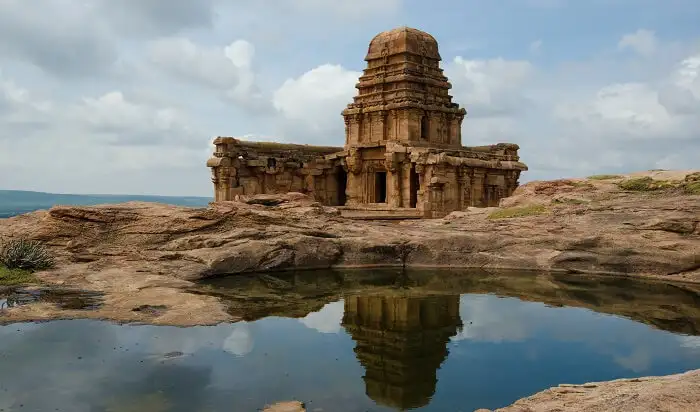
Built along the Agastya Lake, this temple is one of the most photogenic spots in Badami.
During sunset, the reflection of the red cliffs and temple on the water creates a surreal view that attracts photographers from around the world.
6. Rock Climbing at Badami Cliffs
Adventure lovers can experience world-class rock climbing routes on Badami’s sandstone cliffs.
With over 150 bolted routes, it’s one of India’s top climbing destinations, drawing enthusiasts from Europe and Asia.
7. Bijapur (Vijayapura)
📍 Distance from Badami: 120 km
Known for its Islamic monuments, Bijapur is home to the Gol Gumbaz, the second-largest dome in the world after St. Peter’s Basilica.
It’s an excellent day trip from Badami for architecture and history enthusiasts.
🌄 Suggested Itinerary (2 Days in Badami Region)
Day 1:
Arrive in Badami → Explore Cave Temples, Agastya Lake, Bhuthanatha Temple, Banashankari Temple.
Day 2:
Day trip to Aihole and Pattadakal → Return to Badami for sunset at Agastya Lake.
🧭 Travel Tips for Visiting Badami
- Best Time to Visit: October to March (pleasant weather).
- Avoid Summer (April–June): Temperatures can reach 40°C+.
- Clothing: Light cotton wear and sturdy shoes for climbing.
- Local Cuisine: Try “Jolada Rotti,” “Ennegayi,” and “Yennegai Palya.”
- Stay Options: Heritage hotels and guesthouses near Agastya Lake or the Badami bus stand.
Detailed FAQ on Badami
1. Where is Badami located?
Badami is located in the Bagalkot district of northern Karnataka, India. It lies about 450 km northwest of Bengaluru and 125 km from Hubballi. The town is surrounded by rugged red sandstone cliffs and sits on the banks of Agastya Lake.
2. What is Badami famous for?
Badami is world-famous for its rock-cut cave temples, Chalukyan architecture, and ancient fortifications. It served as the capital of the Early Chalukya dynasty between the 6th and 8th centuries. The temples dedicated to Shiva, Vishnu, and Jain Tirthankaras are major attractions.
3. What is the history of Badami?
Founded by Pulakeshin I in the 6th century CE, Badami (then known as Vatapi) became the Chalukya capital. The Chalukyas ruled a vast empire from here, commissioning temples and caves carved out of sandstone hills. Later, it came under the Rashtrakutas, Hoysalas, Vijayanagara Empire, and Marathas.
4. What are the must-visit places in Badami?
- Badami Cave Temples – four magnificent rock-cut shrines.
- Agastya Lake – scenic lake below the caves.
- Bhuthanatha Temple – picturesque temple on the lake bank.
- Badami Fort – with ruins and panoramic hilltop views.
- Archaeological Museum – houses Chalukyan sculptures.
These are the highlights of any Badami sightseeing itinerary.
5. How old are the Badami Cave Temples?
The caves date back to the 6th–7th century CE and are among India’s oldest rock-cut monuments. They were carved under the reign of Mangalesha I and Pulakeshin II of the Chalukya dynasty.
6. What are the entry timings for Badami Cave Temples?
The caves are open daily from 9:00 AM to 5:30 PM. The best time to visit is early morning or late afternoon to avoid heat and capture the warm sandstone glow for photography.
7. What is the entry fee for Badami Cave Temples?
- Indians: ₹25 per person
- Foreigners: ₹300 per person
- Children below 15 years: Free entry
Tickets are available at the site entrance managed by the Archaeological Survey of India (ASI).
8. How much time is required to explore Badami?
You’ll need around 4–5 hours to explore the cave temples, fort, lake, and museum. Add a full day if you plan to visit Aihole and Pattadakal, which are among the nearby attractions around Badami.
9. How to reach Badami by train, road, and air?
- By Train: Badami (BDM) station, 5 km from town, connected to Bengaluru, Hubballi, and Solapur.
- By Road: Excellent KSRTC and private bus services from Bengaluru, Hospet, and Hubballi.
- By Air: Nearest airports are Hubli (110 km) and Belgaum (150 km).
10. What is the best time to visit Badami?
The ideal time is October to March when the weather is cool and pleasant. The sandstone cliffs and lake look stunning under soft winter light. Avoid April–June due to high temperatures.
11. Is Badami safe for tourists?
Yes. Badami is a peaceful, small heritage town with friendly locals. As with all tourist destinations, basic precautions like avoiding isolated areas at night and safeguarding valuables are advised.
12. Are there hotels and restaurants in Badami?
Yes, there are heritage resorts, budget lodges, and mid-range hotels near the bus stand and Agastya Lake. Local restaurants serve authentic North Karnataka meals, Jolada Rotti, and Ennegayi.
13. What are other nearby attractions around Badami?
Don’t miss:
- Aihole (35 km) – early temple prototypes.
- Pattadakal (22 km) – UNESCO World Heritage temples.
- Banashankari Temple (5 km) – popular pilgrimage site.
- Mahakuta Temples (14 km) – ancient Dravidian shrines.
These spots make a perfect Badami day-trip circuit.
14. What is the significance of Agastya Lake?
Agastya Lake, lying below the caves, is a sacred water body believed to have purifying powers. The lake’s calm waters beautifully reflect the red cliffs and temples, creating one of the most photographed scenes in Karnataka.
15. Are there any adventure activities in Badami?
Yes! Badami is a world-class rock-climbing destination with over 150 bolted routes on its sandstone cliffs, attracting climbers from across the world. Local guides and gear rentals are available.
16. What are the temple dress code and guidelines?
Dress modestly; sleeveless outfits or shorts are discouraged inside temples. Remove footwear before entering shrines, and avoid touching carvings or sculptures.
17. Is photography allowed inside the caves?
Yes, still photography is allowed, but tripods and flash are restricted. Drone usage requires prior permission from the ASI office.
18. Are guides available in Badami?
Yes, certified local guides can be hired at the site entrance. They charge between ₹300–₹700 depending on the duration and group size, and they provide excellent insights into the history of Badami.
19. How can I include Badami in a Karnataka tour?
Badami can be combined with Hampi, Aihole, Pattadakal, Bijapur, and Hubballi in a 5- to 7-day Karnataka heritage circuit. Many travel agencies offer customized Karnataka tour packages including Badami.
20. Why should you visit Badami?
Badami offers a rare mix of history, art, adventure, and culture. The rock-cut caves, lakefront temples, and ancient stories carved in stone make it a must-visit for every traveler who loves India’s heritage.
🏁 Conclusion
Badami isn’t just a stop for history buffs — it’s a destination where nature, heritage, and adventure meet.
From the rock-cut shrines to the peaceful temples of Aihole and Pattadakal, every stone here tells the story of India’s architectural evolution.
If you’re planning a cultural road trip through Karnataka, exploring the nearby attractions around Badami will give you a true taste of India’s golden past.